
Smith County Warrant Search Without an Online Portal
No official Smith County online active-warrant list exists. The Sheriff's Office page does not host a warrant lookup, and the county publishes no searchable warrant database. That makes a phone call or an office visit the real tool. The fastest answer comes from the office tied to your specific matter.
The county splits warrant work across several offices. The Smith County Justice Court issues process papers, subpoenas, and warrants that require a court appearance on a set date, and it sets hearing dates on traffic and criminal charges. The Sheriff's Office serves arrest warrants and runs the detention center. Constables serve process and execute Justice Court judgments. The Circuit Clerk tracks felony case status, and a municipal court holds any warrant tied to a city citation.
Each office answers a different question. Match your need to the right one before you call.
Note: a person can have an active warrant and still not appear in the jail roster, because the roster lists only people currently in custody.
Who Issues Warrants in Smith County
Warrants in the county come from a court, not from the Sheriff alone. The Justice Court is the most common source for local warrants. Its judges handle criminal violations that occur outside the cities but inside the county, citations written by the Highway Patrol and wildlife officers, and small civil matters. When someone misses a Justice Court date or ignores a citation, that court can issue the warrant.
Felony matters move higher. The Smith County Circuit Court, part of the 13th Circuit District, handles indictments, pleas, and felony proceedings, and warrants can issue from that level once a case is filed. City courts handle warrants tied to municipal ordinances and city traffic tickets. A warrant for a felony case usually traces back to Circuit Court records, while a warrant for a missed traffic hearing usually traces back to Justice Court.
The path of a charge often runs Justice Court, then prosecutor review, then Circuit Court for felonies. Knowing that path tells you which clerk to call.
Types of Warrants and Holds in Smith County
Not every warrant works the same way, and the word "hold" can mean something different again. The list below covers the orders most often seen in Smith County criminal and traffic matters. A single person can face more than one at a time.
- Arrest warrant - a court order that authorizes law enforcement to arrest a named person on a criminal charge.
- Bench warrant - issued by a judge when a person fails to appear in court or violates a court order.
- Search warrant - authorizes a search of a place or property, and it is often sealed or not public before it is carried out.
- Capias or failure-to-appear warrant - results from a missed court date, unpaid fines, or failure to comply with a court order.
- Detainer or hold - a request from another agency to keep a person in custody, sometimes visible in the jail system after booking.
- Civil process or execution - papers and judgments that the Justice Court and constables serve and enforce in civil cases.
How Smith County Warrants Are Served
Two constables serve warrants and process for the Justice Court. The county lists Joe Blakeney for Post 1 and Bobby Easterling for Post 2. Constables attend the Justice Court of their district, execute the judgments in criminal cases before that court, and help enforce state criminal law. They are the officers who deliver subpoenas, serve process papers, and carry out warrants that require a court appearance.
The role of the constables is described on the Smith County constables page, which lists both officers and their Justice Court duties. The screenshot below shows how the county presents that office and its contact details.
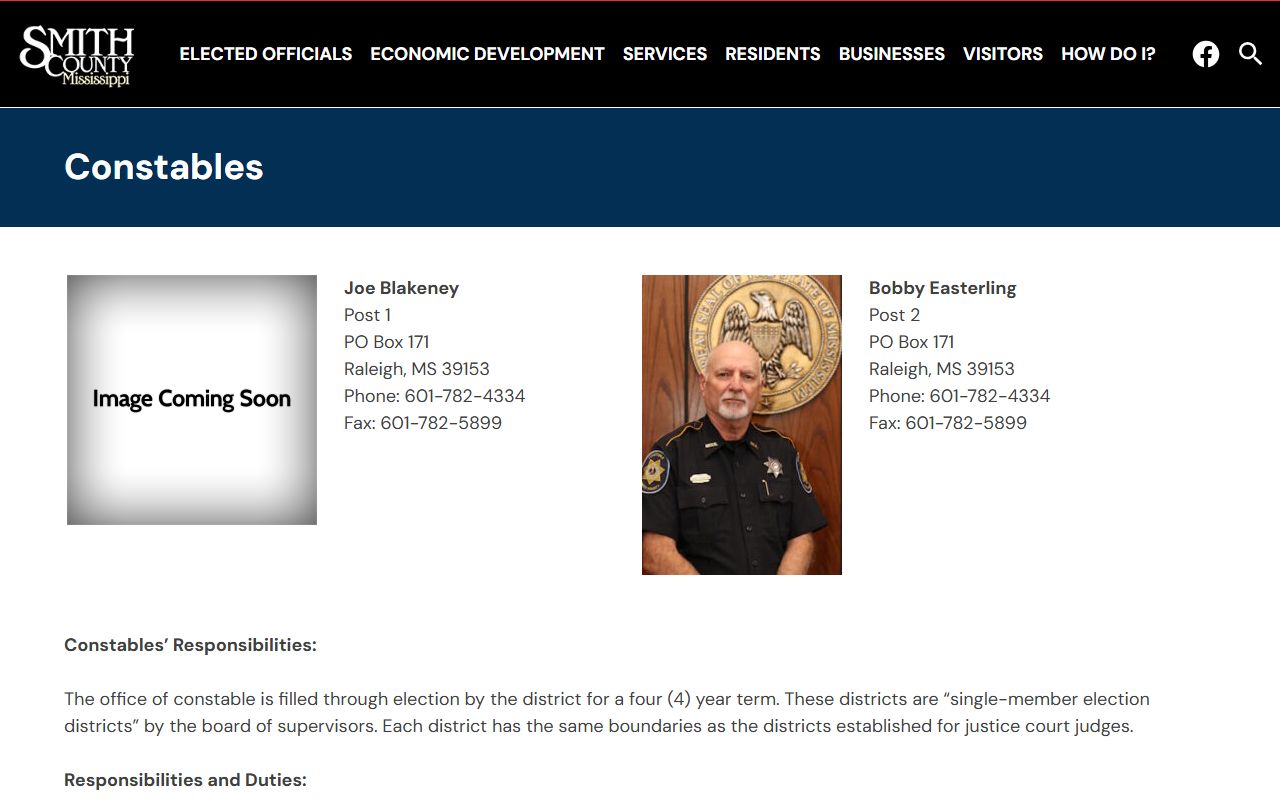
Constables share the Justice Court Clerk's mailing address and phone line, so a single call reaches the office that coordinates service. The Sheriff's deputies serve arrest warrants and bring people into the detention center, while constables focus on Justice Court process. When you do not know which officer holds a paper, the Justice Court Clerk can point you to the right one.
How to Check for a Smith County Warrant
Because there is no web form, a warrant check in Smith County is a request, not a database search. You give a full legal name and date of birth to the office that would hold the warrant, then ask what is on file. A case or citation number speeds the answer for traffic and Justice Court matters. The contact card below is the first stop for most citation and failure-to-appear questions.
Smith County Justice Court
Clerk Donna Watts
P.O. Box 171, Raleigh, MS 39153
601-782-4334
Fax 601-782-5899
The table below sets out what a Smith County warrant check actually involves. It is an explicit no-portal table, because the county offers no online search field. Treat the "fields" as the details an office will ask for by phone or in person.
| Field Label | Type | Required | Options / Format Notes |
|---|---|---|---|
| Online warrant search | N/A | N/A | No official Smith County warrant search found. |
| Name | Phone or in-person request | Practical requirement | Provide full legal name and date of birth when asking the Justice Court or Sheriff. |
| Case or citation number | Phone or in-person request | Optional but helpful | Especially for failure-to-appear, traffic, or Justice Court cases. |
| Court | Office selection | Required by user | Justice Court, Circuit Court, Chancery Court, or municipal court depending on the source. |
Steps to Resolve a Smith County Warrant
A warrant rarely clears on its own, and waiting often makes it worse. The steps below move from confirming the warrant to settling it through the right office. Work them in order, and write down names and case numbers as you go.
- Do not rely on absence from the jail roster. The roster shows people in custody, not everyone with a warrant, so a clear list does not mean a clear record.
- Call the Smith County Justice Court at 601-782-4334 for traffic and criminal charge hearing dates, citation warrants, and Justice Court warrants.
- Call the Sheriff's Office at 601-782-4531 for custody, arrest, surrender, or booking questions.
- If the warrant relates to a felony case, call the Circuit Clerk at 601-782-4751 for case status and docket information, then speak with an attorney or the court as needed. Felony case papers live in the Smith County criminal court records.
- If the warrant relates to a municipal citation or city ordinance, contact that city court directly.
- Ask whether bond is set, whether a court appearance is required, what payment methods are accepted, and whether the warrant clears at once after payment or needs a judge's order.
What a Smith County Warrant Record Shows
A warrant order names a person and a reason, and it ties to the court that issued it. The county does not post these documents online, but the basic fields are consistent across Justice Court and Circuit Court warrants. The inventory below reflects the entries an office can read to you or print on a certified copy.
| Field | What It Shows |
|---|---|
| Defendant name | The full legal name of the person the warrant names, often with a date of birth. |
| Issuing court | Justice Court, Circuit Court, or a municipal court, depending on the charge. |
| Warrant or case number | The identifier the clerk uses to pull the file and confirm status. |
| Charge or reason | The criminal charge, the citation, or the missed appearance behind the order. |
| Court date | The appearance date a warrant may require, common on Justice Court process. |
| Bond | Any amount or condition set for release, when the court has set one. |
| Service status | Whether a constable or deputy has served the paper and any return notes. |
Detainers and Holds in the Smith County Jail
Warrant information sometimes surfaces only after an arrest. Once a person is booked into the Smith County Detention Center, charge and hold details may appear in the jail's BlueHorse portal. The portal links from the Sheriff's Office page and lists current inmates with booking photos and related charges.
Inside a profile, the detainers and holds table carries four columns: Description, Agency, Bond Amount, and Bond Method. The charges table adds a Case Number and an OTN, which is an offender tracking number. These entries can reveal a hold placed by another agency that a simple name check would miss. The current custody roster and its fields are covered on the Smith County inmate records page.
Note: a detainer means one agency has asked the jail to keep a person in custody for it, even after the local matter is settled.
What to Do About an Outstanding Smith County Warrant
An outstanding warrant does not go away with time. It can lead to arrest during a traffic stop, a license issue, or a job background problem. The safer path is to confirm the warrant, learn the charge and any bond, and plan a response with help.
Start by confirming the warrant through the Justice Court, the Circuit Clerk, or the Sheriff, depending on the matter. Ask whether bond is already set and whether you can post it. Many people arrange a voluntary surrender so the timing is on their terms rather than during a roadside stop. A lawyer can speak to the court, ask to recall a bench warrant, or set a new hearing date before you appear.
Important: Talk with a defense attorney before you turn yourself in, so you understand the charge, the likely bond, and your options at the first appearance.
Restricted and Federal Warrant Records
Some warrants are not open to the public. A search warrant is often sealed before it is carried out, so the court will not confirm it in advance. Juvenile and youth-court matters are confidential under Mississippi law, and those records are not public-search material. Sealed and expunged records are closed by statute or court order, which is why an office may decline to discuss a specific file.
Federal warrants follow a separate track. They do not run through the county courts at all. Smith County sits in the Southern District of Mississippi, where the U.S. Marshals serve federal warrants and the U.S. Attorney's Office for the Southern District of Mississippi prosecutes federal cases. The federal office page below shows where that work is based.
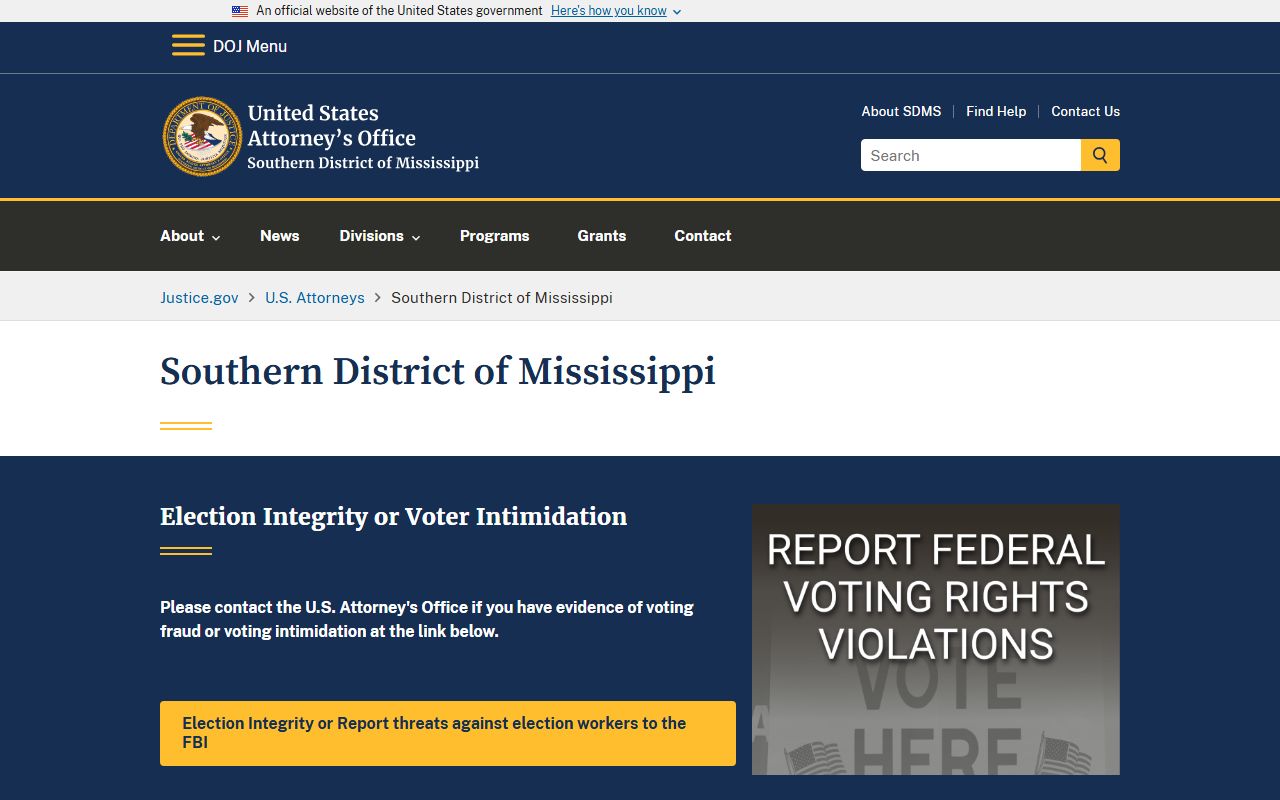
For a federal matter, county clerks cannot help and will refer you to the federal district. State and county records requests, on the other hand, run through the office that holds the file under the Mississippi Public Records Act, subject to the exemptions that protect sealed, juvenile, and law-enforcement-sensitive material.