
What a Court Docket Is in Smith County
A docket is the chronological court record of filings, hearings, orders, and events in a case. Each line on it is a docket entry. One entry might note a complaint filed, a motion set for hearing, a plea entered, or an order signed by the judge. Read in order, the docket tells the story of a case from the day it opened to the day it closed. It is the quickest way to see what stage a Smith County case has reached and what comes next.
A docket is not the same as the full case record. The docket is the index of events. The full file holds the actual documents behind those events, such as the pleadings, motions, exhibits, and signed orders. A docket line might read that a motion was filed, but the motion itself sits in the case file. For court dates, deadlines, and case status, the docket usually answers the question. For the wording of an order or the content of a pleading, the full record is needed.
Smith County dockets are kept court by court. The Circuit Clerk maintains a general court docket for Circuit and County Court. The Chancery Clerk keeps dockets and minute books for Chancery Court. Justice Court tracks hearing dates and citations through its own clerk. There is no single county docket that covers every court at once.
The Mississippi Judiciary explains how these trial courts fit together on its overview of the state court system, which lays out Circuit, Chancery, County, Justice, and Municipal courts. The chart below the text shows why a docket lookup starts with picking the right court for the case type.
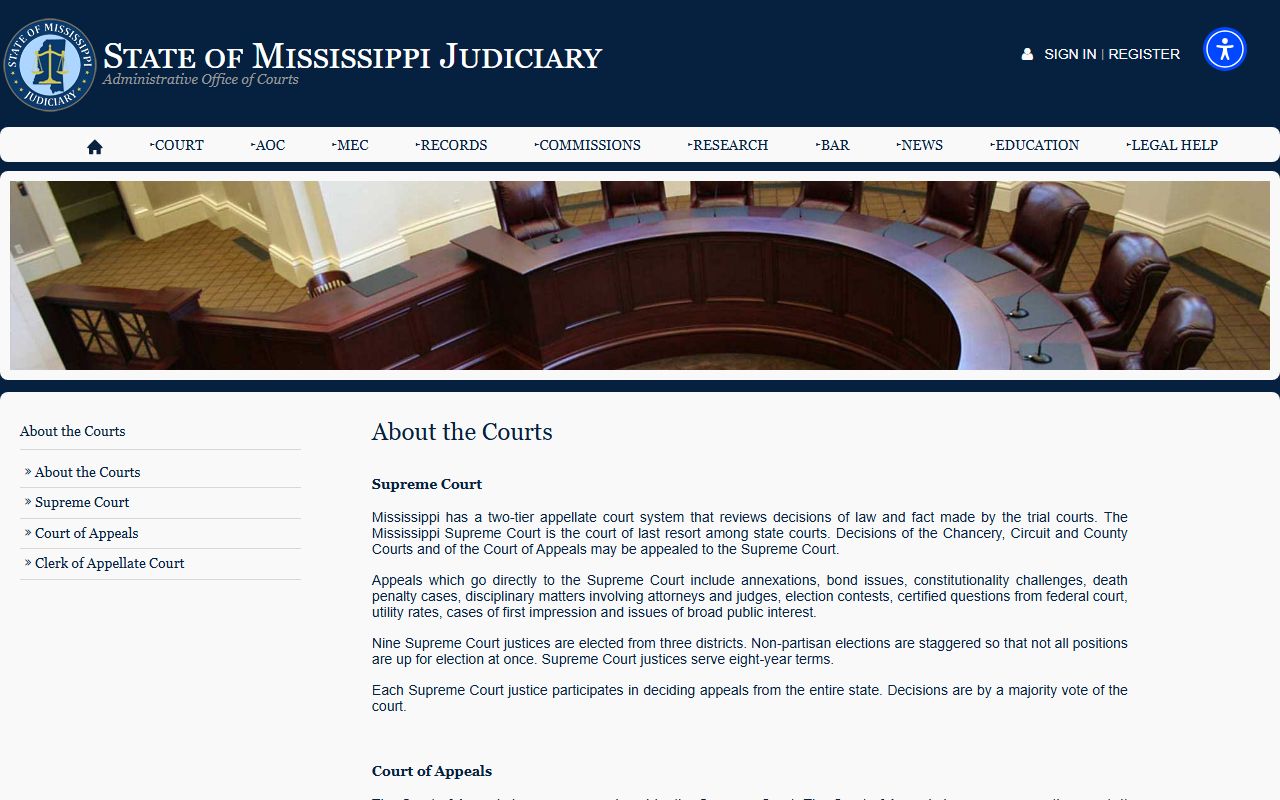
Once the court level is clear, the matching clerk office and the matching docket follow from it. A felony belongs to Circuit Court, a divorce to Chancery Court, a speeding ticket to Justice Court.
Courts That Keep Smith County Dockets
Three local offices hold the dockets most people need. The split follows the kind of case, so the first job is to match the matter to the court that handles it.
- Circuit Court, through the Circuit Clerk, for felonies, major civil suits, misdemeanors on appeal, and appeals from lower courts.
- Chancery Court, through the Chancery Clerk, for divorce, custody, estates, probate, guardianship, land disputes, and other equity matters.
- Justice Court, through its clerk, for traffic citations, small civil suits up to a set dollar limit, and criminal charges arising outside city limits.
- Municipal Court, run by a city, for city ordinance and city traffic cases when a municipality keeps its own court.
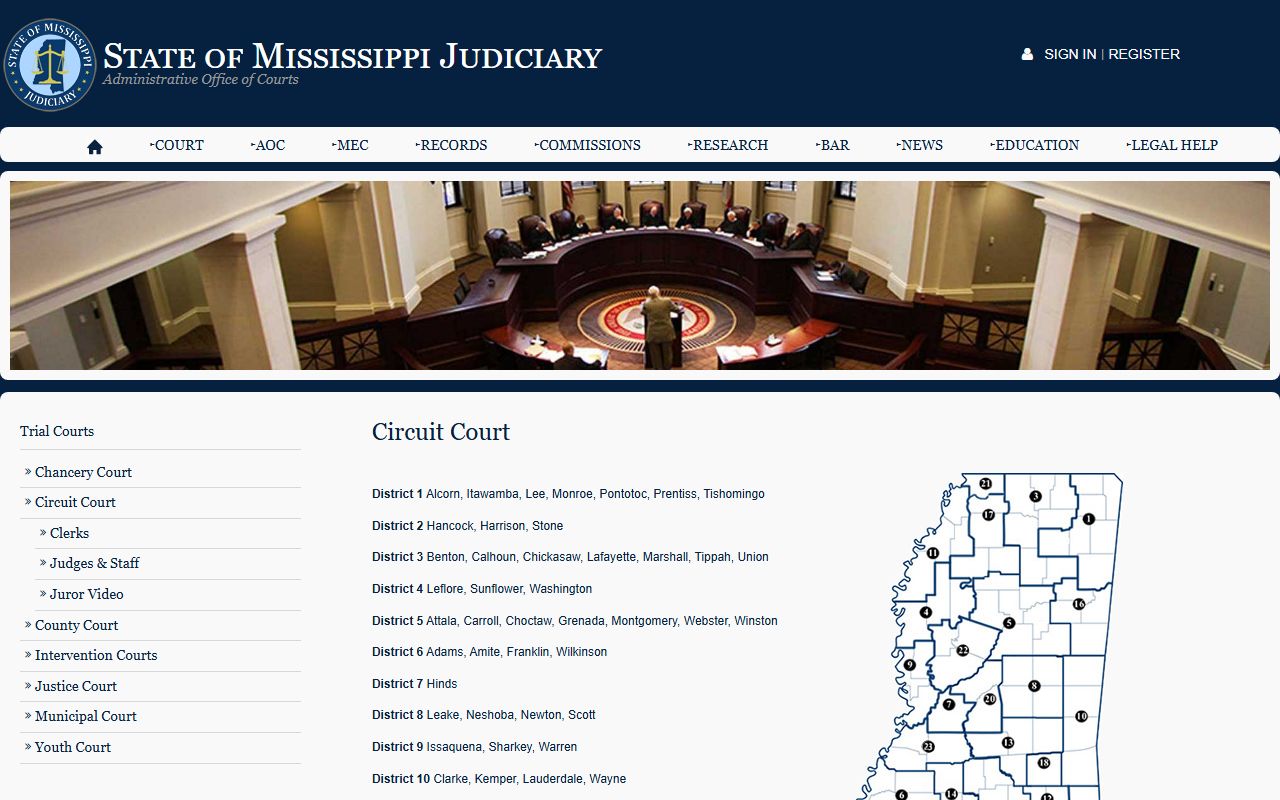
Circuit Court is the law court for Smith County and sits in the 13th Circuit Court District. The Circuit Clerk keeps a general court docket that records the names and parties in each case, pleas, indictments, records from inferior courts on appeal, and other papers. The office also keeps the orders of the court referenced in the minute book, the execution docket, and a full record of the proceedings. Felony and major civil case progress shows up here.
The Mississippi Judiciary describes this court's reach on its Circuit Court page, which covers felony, civil, and appellate jurisdiction statewide. That statewide framework is the backbone of the Smith County Circuit docket and the case types it carries.
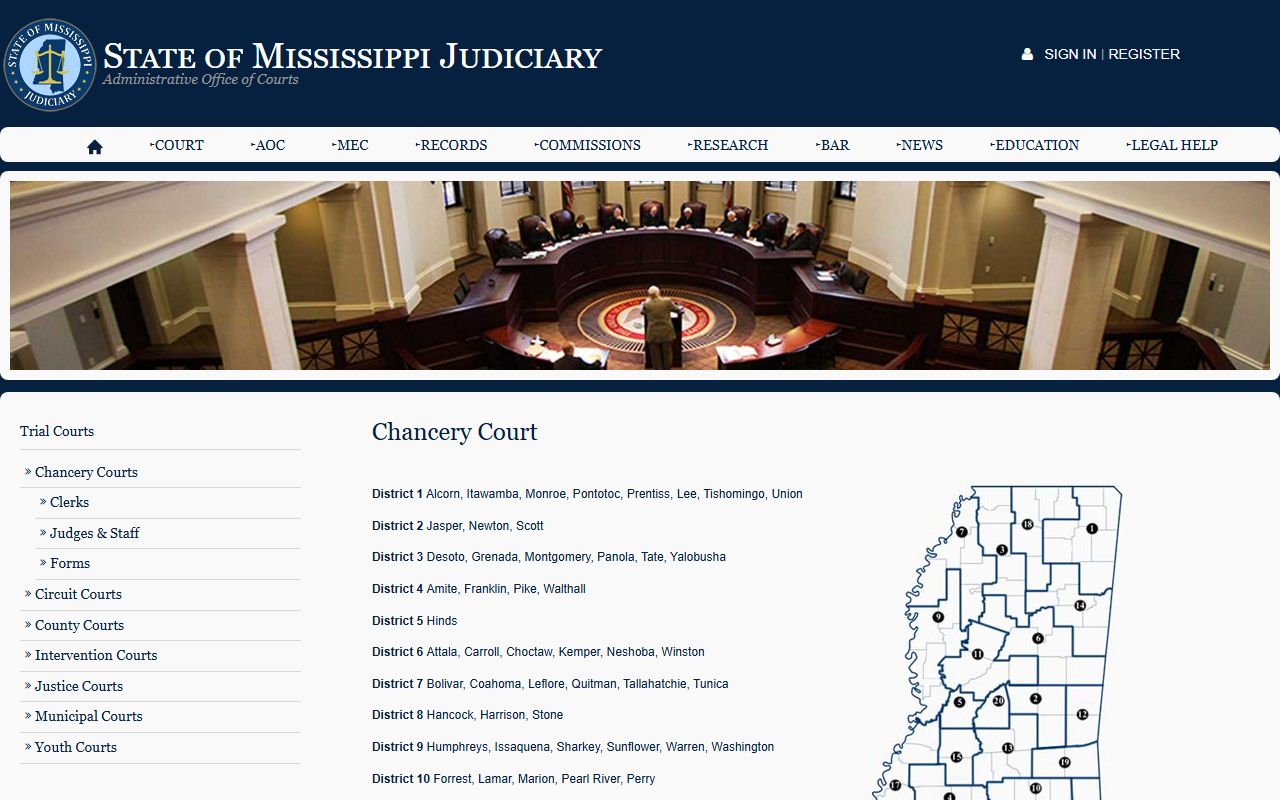
Chancery Court is the separate court of equity. The Chancery Clerk attends each session, maintains the minutes of the court, creates and maintains a file for each Chancery suit, issues process for defendants, and records court activity in various dockets and minute books. Divorce, child custody, estates, guardianship, conservatorship, and land-title disputes all leave a trail in those Chancery dockets and minutes. Chancery Clerk records and court sessions are now housed in the Chancery Building across from the courthouse.
The state's Chancery Court page summarizes that equity, domestic, probate, guardianship, and land jurisdiction. Those same categories define what a searcher will and will not find on a Smith County Chancery docket.
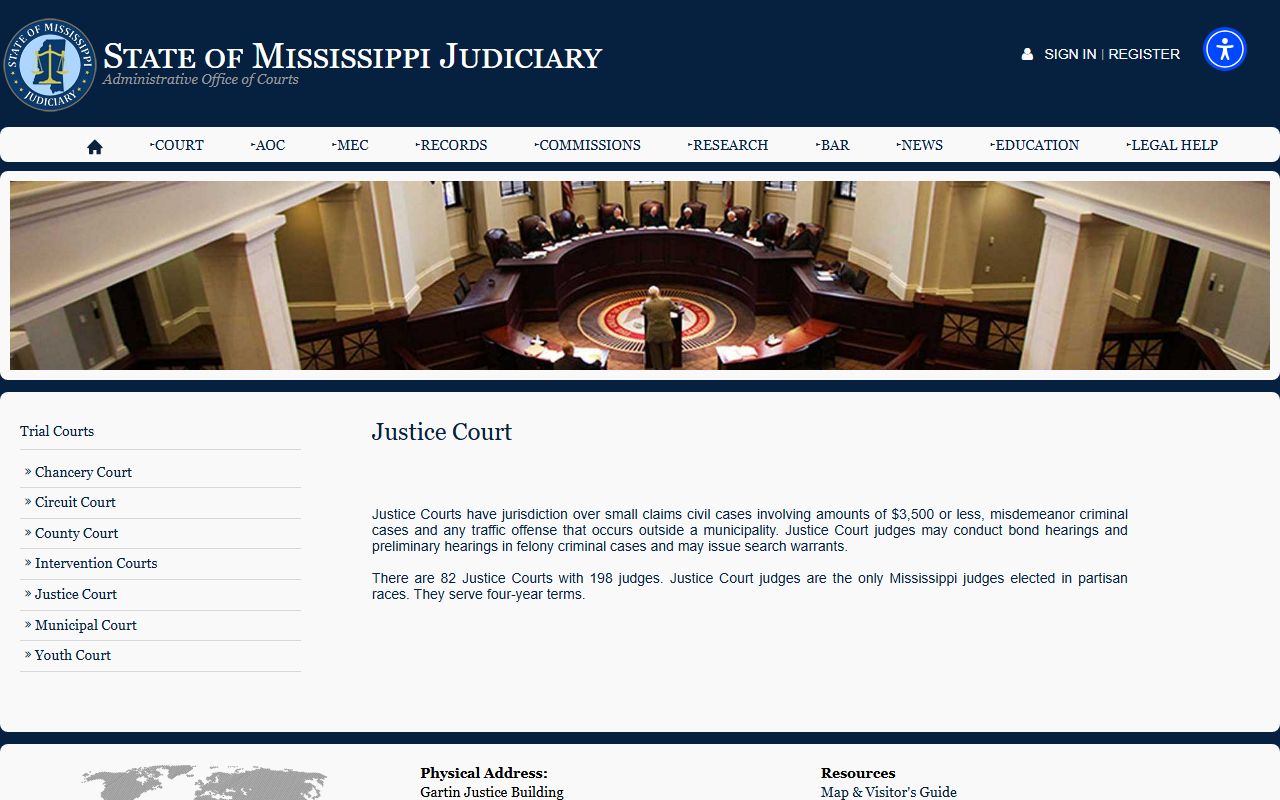
Justice Court is the busiest court for everyday matters. It handles citations from the Mississippi Highway Patrol and Fish and Wildlife officers, hears protests of those citations, and takes criminal violations that happen outside a city but inside the county. Its process papers, subpoenas, and warrants require a person to appear on a set date. Justice Court hearing dates and citation records run through the Justice Court Clerk, Donna Watts.
The Mississippi Judiciary outlines this lower court on its Justice Court page. For most traffic and minor criminal dockets in Smith County, this is the court to call.
What a Smith County Docket Entry Shows
A docket entry packs several pieces of information into one line. The exact fields depend on the court and the case type, but the building blocks are consistent. The table below maps the common fields drawn from Circuit, Chancery, and Justice Court records to what each one tells a reader.
| Field | What It Shows |
|---|---|
| Case or cause number | The court-assigned identifier that ties every entry, filing, and order to one case. |
| Filing or entry date | The date a paper was filed or an event was recorded, which sets the case timeline. |
| Parties | The plaintiff or petitioner and the defendant or respondent, plus their attorneys. |
| Pleadings and motions | Complaints, answers, petitions, and written requests asking the court to act. |
| Orders | Rulings and orders of the court, referenced in the minute book or entered to the docket. |
| Hearing settings | Scheduled court dates, trial settings, and continued hearing dates. |
| Disposition | The current or final outcome, such as dismissed, guilty, decree entered, or disposed. |
Some fields are court-specific. A Justice Court citation docket adds the citing agency, the fine and cost amount, the payment status, and a failure-to-appear or warrant note when a date is missed. A Chancery docket adds the chancellor, the case style, service of process, and a decree at the end. A Circuit criminal docket adds the indictment count, the plea, the bond, and the sentence.
Note: Public docket copies leave out Social Security numbers, sealed or expunged matters, confidential youth court files, and protected minor details.
How to Find Smith County Docket Information
There is no single county-built website that searches every Smith County docket at once. The statewide online route is Mississippi Electronic Courts, reached for the public through Public Access Mississippi Electronic Courts, known as PAMEC. It is a registered-access system, not an open search box. When a record is not available remotely, the clerk office that holds it is the next stop. The steps below work for most cases.
- Identify the case type and the court. Send felonies, major civil suits, and Circuit appeals to Circuit Court. Send divorce, probate, estate, guardianship, and land matters to Chancery Court. Send citations, small civil cases, and county misdemeanors to Justice Court.
- Try PAMEC for remote Circuit and Chancery records. Open the Public Access MEC registration page, set up an account, and use the case-search functions after login.
- Search by case number or by party name once you are logged in. Smith County Chancery Court and Smith County Circuit Court both appear in the MEC court directory.
- Review the docket entries in date order. Note the most recent hearing setting, any pending motions, and the current disposition.
- If PAMEC blocks or excludes the record, contact the clerk. Call the Circuit Clerk at 601-782-4751 for Circuit and County Court dockets, or the Chancery Clerk at 601-782-9811 for Chancery, probate, divorce, and land matters.
- For a traffic citation or a county criminal charge, call Justice Court Clerk Donna Watts at 601-782-4334 to confirm a hearing date or to set one.
In-person review is the fallback when a docket is not online. The Circuit Clerk's office handles Circuit and County Court files. The Chancery Clerk, with land records open Monday through Friday from 8:00 a.m. to 5:00 p.m., handles equity and land matters. The broader path for pulling a full file, certified copies, and clerk contacts is covered on the Smith County court records page.
Remote Docket Access Through PAMEC
PAMEC is the public face of Mississippi Electronic Courts, the state's internet-based filing and case-management system. It gives registered users electronic access to case information, including docket entries and documents, for participating Mississippi courts. Smith County Circuit Court and Smith County Chancery Court take part in the system. Public users register, pay an annual registration fee, and then view documents at a per-page rate. High-authority sources tied to the Administrative Office of Courts report a $10 annual registration fee and about 20 cents per page for public document viewing.
Registration matters because the public search screen will not open without an account. Before login, the site returns only registration and terms information, not live Smith County case dockets. After login, the system works much like other electronic court portals, with searches by case number and party name and paid access to the documents behind each docket entry. Sealed and restricted cases stay out of remote public view.
This online access is the result of a statewide court initiative, not a Smith County project. The Mississippi Judiciary announced that electronic filing was completed statewide for Mississippi courts in 2025. That milestone is why Smith County Circuit and Chancery dockets now feed into one shared electronic environment.
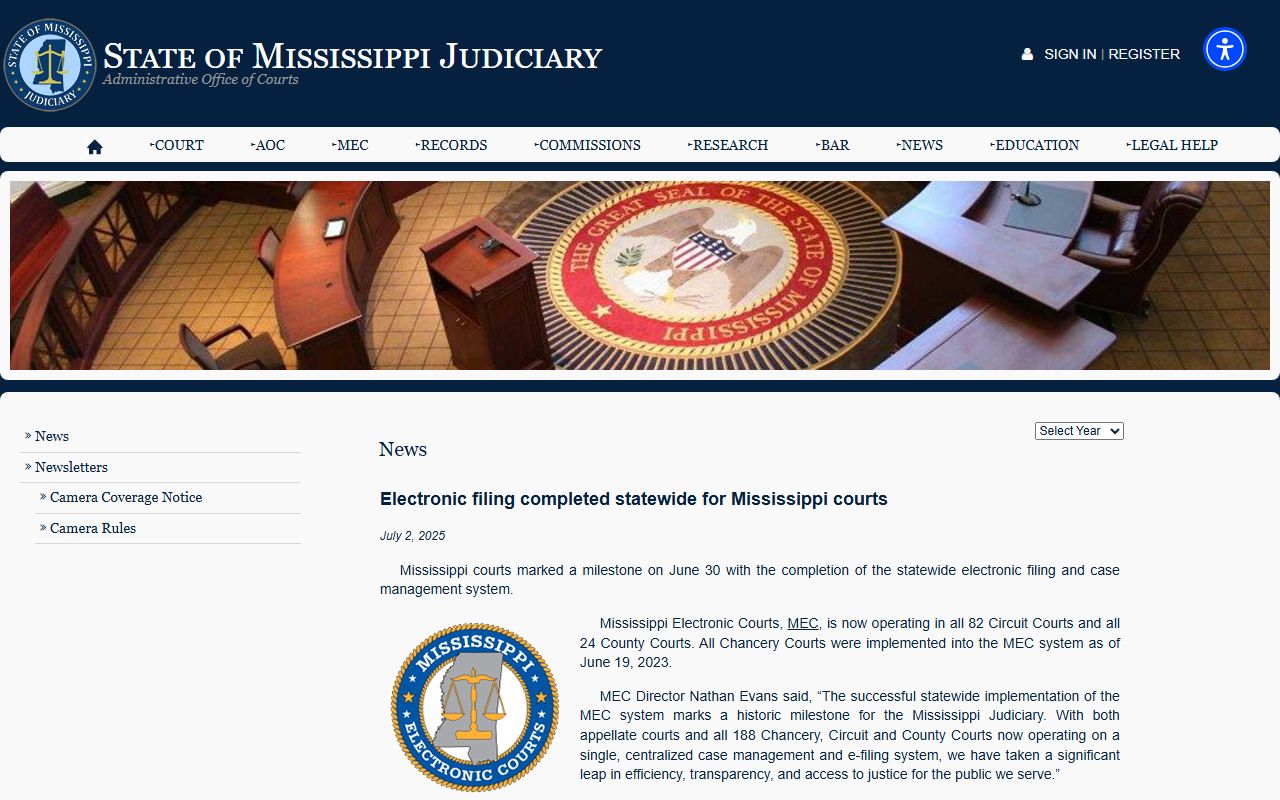
For a searcher, the practical takeaway is simple. Online docket access for Smith County runs through the statewide MEC and PAMEC system, while the clerk offices remain the source for records that are not posted remotely.
Smith County Docket Versus the Full Case Record
The difference between a docket and a full case record decides where to look and what it costs. A docket is a list of events. A full case record is the stack of documents those events produced. Many questions are answered by the docket alone, so it pays to know which one the situation calls for before spending time or money on copies.
| Docket | Full Case Record | |
|---|---|---|
| Format | List of dated entries | Full documents and exhibits |
| Content | Filings, hearings, orders by reference | Pleadings, motions, orders, decrees in full |
| Access | Registered PAMEC view or clerk lookup | Per-page copy fee or clerk office visit |
| Best use | Track case status and court dates | Legal review, certified copies, evidence |
Use the docket to confirm a hearing date, see whether a motion is pending, or check a disposition. Pull the full record when the exact wording of an order is needed, when a certified copy is required for another court or agency, or when the documents behind an entry matter. Copies made by the public run 25 cents per page and copies made by staff run 50 cents per page, with certified copies carrying an added fee.
Justice Court Hearing Dates in Smith County
Justice Court is where a person sets or confirms a hearing date on a traffic citation or a county criminal charge. The county instructs people who need a court date to contact Justice Court directly. There is no online Smith County citation lookup or payment portal, so the phone and mail are the working channels. The Justice Court Clerk holds the citation file, the hearing calendar, and the payment record for each case.
Setting a hearing date. To contest a citation or schedule a court date, call the Smith County Justice Court Clerk at 601-782-4334. The county FAQ says to contact Justice Court to establish a hearing date on a traffic citation or a criminal charge. To pay instead, call first for the amount owed, then mail a money order or cashier's check with a copy of the citation to the Justice Court Clerk.
Keep the citation handy when calling, since the citation number and the defendant name speed up the lookup. If the ticket was written inside a city, the case may belong to that municipal court rather than to county Justice Court. Confirm the venue before paying, because Smith County Justice Court does not hold city citations.
Note: Missing a Justice Court date can trigger a failure-to-appear entry and a warrant, so a call to set or move the hearing protects the record.
How to Read Smith County Docket Terms
Docket lines lean on shorthand. A few core terms unlock most entries across Circuit, Chancery, and Justice Court. The short glossary below defines the words that appear most often on a Smith County docket.
- Docket
- The chronological court record of filings, hearings, orders, and events in a case.
- Disposition
- The current or final outcome of a case or charge, such as dismissed, guilty, not guilty, or disposed.
- Motion
- A written or oral request asking the court to take a specific action.
- Plea
- A defendant's formal response to a criminal charge, such as guilty or not guilty.
- Capias
- A warrant directing law enforcement to take a person into custody, often after a failure to appear.
- Minute book
- The official record where court orders and proceedings are referenced or preserved.
Circuit Court dockets often show an indictment count, a bond, a trial setting, and a sentence. Chancery dockets close with a decree and may show guardianship or estate accounting entries. Justice Court dockets list the citing agency, the fine, the payment status, and a reinstatement note once a matter is cleared. When a term is unclear, the clerk who keeps that docket can confirm what an entry means, and the full case file fills in the documents behind it.
For the law court that anchors most felony and civil dockets, the structure of the bench, the 13th Circuit District judges, and the case flow are detailed on the Smith County Circuit Court page.