
Smith County Arrest Records and Charges
A Smith County arrest record is the documentation created when law enforcement takes a person into custody. It names the arresting agency, often the Smith County Sheriff's Office under Sheriff Joel Houston, and ties to the booking entry made at the Smith County Detention Center. The arrest record reflects the booking, not the verdict. Being arrested does not file a charge by itself. After the arrest, a prosecutor reviews the facts and decides which formal charges to bring. Prosecuting Attorney Wendell James handles charges in Justice and County Court, while District Attorney Chris Hennis presents felony charges to the grand jury for Circuit Court. Once those charges reach the clerk, they become the court charge record.
Two records sit in two places. The arrest and booking side lives with the sheriff and the jail roster. Booking photos, charges at intake, and bond details show up there, and the Smith County inmate records page covers that roster in detail. The court charge record is what the prosecutor actually filed, and it is tracked through the case as it moves between courts. Court charges after arrest can change, get added, or fall away before trial. For the full case file, with pleas, disposition, and sentence, the Smith County criminal court records hold the complete history.
How to Find Smith County Arrest Records
Smith County does not run one single search box for arrest records and charges. The booking side starts with the Sheriff's Office inmate portal, which lists current detainees with their charges at intake. The court charge record sits in the clerk's case files. Felony cases route to the Circuit Clerk, and lower charges route to Justice Court. Statewide court documents are reached through Mississippi's registration-based electronic court system.
- Open the Smith County jail portal through the Sheriff's BlueHorse inmate search to see current bookings and the charges recorded at intake.
- Search by first and last name, since the public current-inmate fields are name based.
- For the filed court charges, register with Public Access Mississippi Electronic Courts and open the case by defendant name or case number.
- Read the charge list, then check each charge's code, severity level, and current status.
A single booking can list several charges, and each charge row carries its own data. The Smith County jail portal charge schema shows the fields below, which is the closest the county gets to a sample charge record.
| Charge Field | What It Shows |
|---|---|
| Code | The statute or offense code tied to the charge. |
| Description | The plain-language name of the offense. |
| Charge Type | Whether the count is a felony, misdemeanor, or lesser violation. |
| Disposition | The current or final outcome of that charge. |
| Case No. | The court case number the charge is filed under. |
| OTN | The offender tracking number linking records across agencies. |
| Offense Date | The date the alleged offense took place. |
Charges that lead to a conviction and a state sentence also show up in statewide systems. The Mississippi Department of Corrections and the state sex offender registry, both covered further down, carry charge and criminal-history detail after a case resolves.
How Smith County Charges Get Filed
The court charge record begins when a prosecutor files a charging document. The arrest happens first at booking. The charge is the formal accusation that opens the court case. Mississippi uses three main charging instruments. Which one applies depends on how serious the offense is and which court hears it.
| Complaint | Information | Indictment | |
|---|---|---|---|
| Filed By | Officer / Prosecutor | Prosecutor | Grand Jury |
| Common For | Misdemeanors | Many felonies | Serious felonies |
| Court | Justice Court | Circuit Court | Circuit Court |
| Starts | The case | The case | The case |
In practice, a misdemeanor or traffic charge can move on a complaint or affidavit filed in Justice Court, where Prosecuting Attorney Wendell James represents the state. A felony reaches Circuit Court only after the case is bound over and the grand jury returns an indictment. District Attorney Chris Hennis then presents those felony charges in the 13th Circuit District.
Note: A charge can begin in Justice Court at the booking stage and reappear later as a Circuit Court indictment if the grand jury moves it forward.
Charge Status in Smith County Records
A charge is not frozen once it is filed. As a case moves, charges can be amended, reduced, added, dropped, or dismissed. The status column in a case file tells you where each count stands right now. Reading it correctly matters. An old arrest entry can look harsher than the final court record.
| Status | What It Means |
|---|---|
| Pending | The charge is filed and active. No plea, verdict, or dismissal has been entered yet. |
| Amended / Reduced | The prosecutor changed the charge, often to a lesser offense or a corrected statute. |
| Dismissed | The court dropped the charge. It will not go forward, though the filing can still appear. |
| Nolle Prosequi | The prosecutor formally chose not to pursue the charge. The Latin phrase means unwilling to prosecute. |
Status can differ from count to count in the same case. One charge may be dismissed while another stays pending. Always read each row, not just the lead charge.
Charges vs. Convictions in Smith County
Being charged is not the same as being convicted. A charge is an accusation. A conviction is a finding of guilt by plea or verdict. Many Smith County charges never become convictions. They get dismissed, reduced, or end in an acquittal.
| Charge | Conviction | |
|---|---|---|
| Stage | Accusation | Verdict or plea |
| Burden of Proof | Probable cause | Beyond reasonable doubt |
| Decided By | Prosecutor | Judge or jury |
| Public Record | Yes | Yes |
Does a dropped charge still show up? Often, yes. The filing can stay in the court index even after a dismissal or a nolle prosequi, unless the record is expunged. A charge with no conviction is still a public court entry until a court orders it removed.
Sealed and Expunged Charge Records
Some charge records are removed from public view. Mississippi law separates sealing from expunction. Sealing hides a record from general public access. Expunction goes further and treats the record as though it never existed. Neither is automatic. Under Mississippi Code Section 99-19-71, a person usually must file a petition in the court that holds the record and meet the statute's conditions.
| Sealed | Expunged | |
|---|---|---|
| Visibility | Hidden from public view | Treated as though it never existed |
| Law Enforcement | Limited access | Very limited access |
| Eligibility | Set by court order and case type | Eligible dismissals, not-guilty outcomes, and certain convictions after waiting periods |
Where to file depends on the court. A felony record is checked with the Circuit Clerk, since Circuit Court handles felony prosecutions. A misdemeanor or Justice Court charge is checked with the Justice Court Clerk or the court of conviction. Fees and forms were not posted in Smith County sources, so call the specific court before filing.
Smith County Charge Codes and Severity
Every charge ties back to a Mississippi statute. The charge code points to the specific law alleged to be broken, and the severity level sets how serious it is. One Smith County arrest can produce several separate charges, each with its own code and level. The severity decides which court hears the case and what penalties are possible.
- Felony: serious crimes prosecuted in Circuit Court after indictment, carrying the longest possible sentences.
- Misdemeanor: lower offenses handled in Justice or Municipal Court, with smaller fines and shorter jail terms.
- Traffic and ordinance violations: citations and local violations, often resolved by a fine or a Justice Court hearing.
The charge code, not the plain-language label, is what links the count to the statute. A description such as simple assault sits next to a code that names the exact section. When the code and the description seem to disagree, the statute controls.
Statewide Charge and Criminal History Lookups
County files are not the only place charges land. Once a case ends in a state sentence, it rolls up into Mississippi's statewide systems. These help when a person has been moved out of Smith County custody and the local jail roster no longer lists them.
The Mississippi Department of Corrections runs a free statewide inmate search on the state portal, where a name or MDOC ID number returns sentenced-offender records.
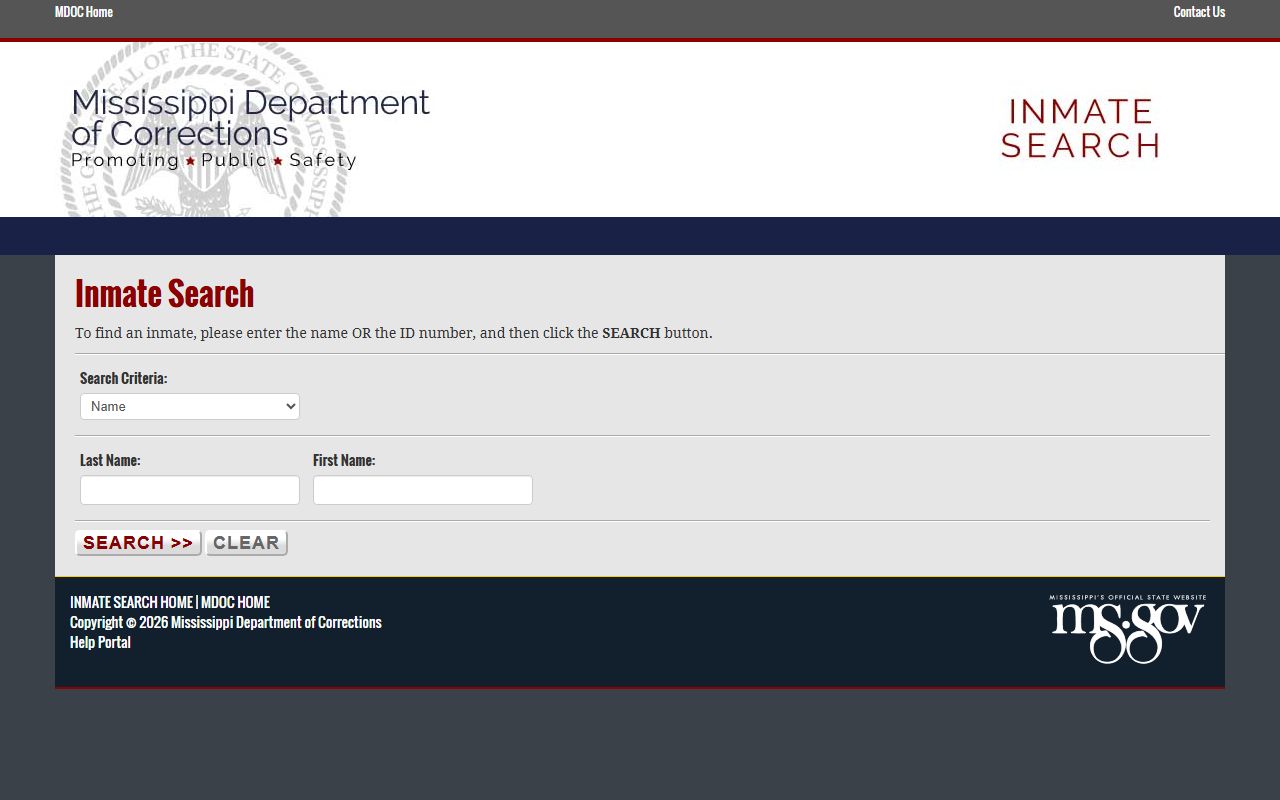
That search confirms whether a charge ended in a state sentence, which the county jail roster stops showing after a transfer. It does not list pending county charges, so it works alongside the court file rather than in place of it.
Some charges also feed a separate public registry. The Mississippi Department of Public Safety hosts the state sex offender registry, searchable by name, address, or ZIP code after a short disclaimer.
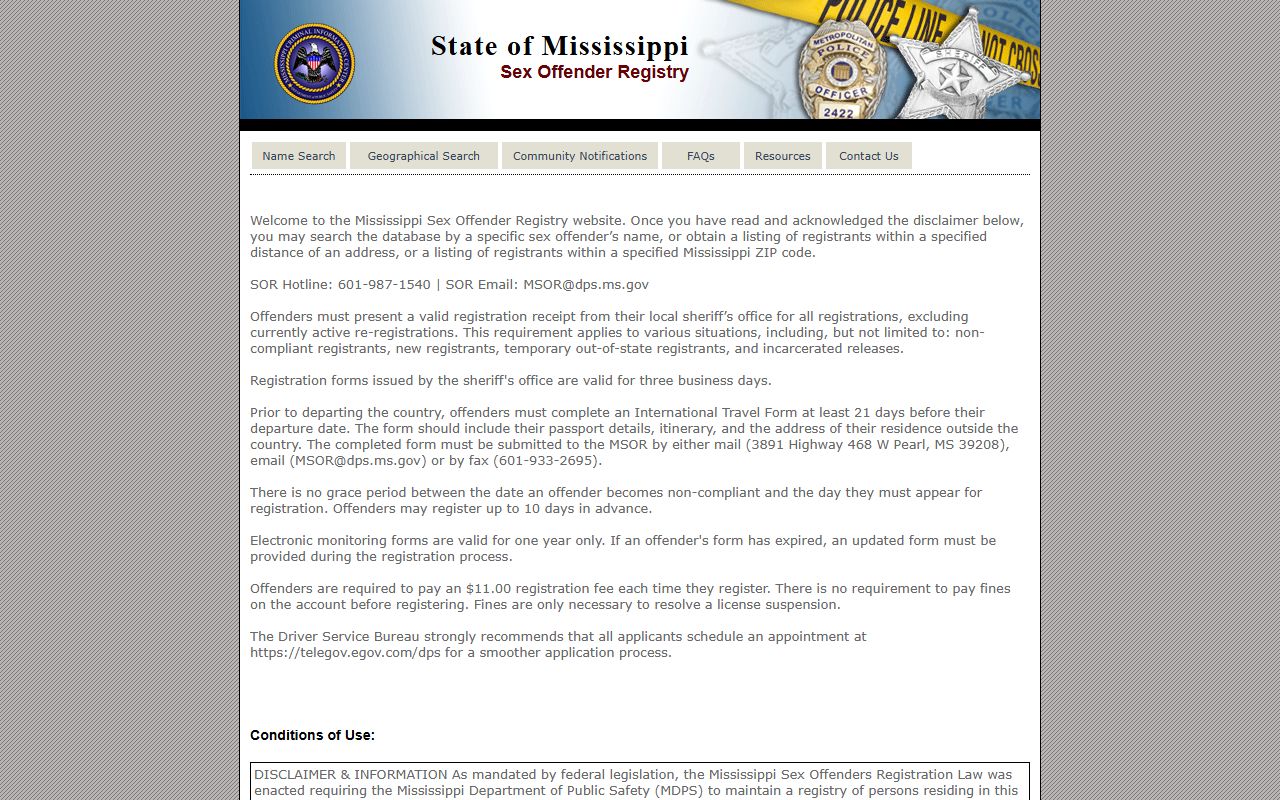
The registry reflects qualifying convictions, not pending charges, so it complements the court record. For the court documents themselves, the registration-based Mississippi Electronic Courts system remains the statewide route to filed charges and dockets.
Background Checks on Smith County Charges
Pulling a few records for personal knowledge is different from running a formal background check. A casual lookup on the jail portal or the court index is informal. A background check used for hiring, housing, or credit is regulated by the federal Fair Credit Reporting Act and must come from a compliant consumer reporting agency.
When a record needs confirming or correcting, the Mississippi Department of Corrections records department handles time, jail-credit, and eligibility questions for state offenders.
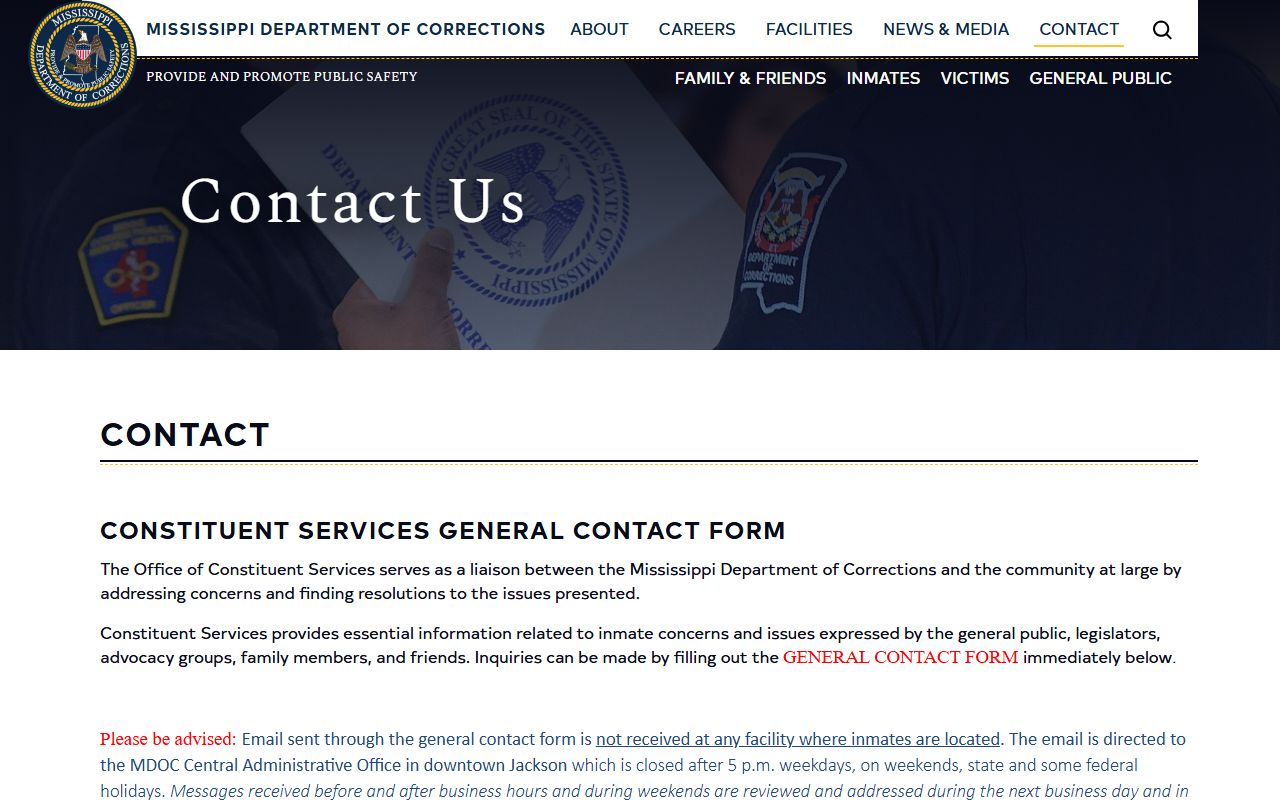
County-level charge questions, by contrast, go to the Circuit Clerk for felonies or the Justice Court Clerk for lower charges. The office that holds the file is the office that can verify a charge or a case number.
Important: Smith County Court Records is not a consumer reporting agency, and nothing here may be used for credit, employment, tenant, or insurance decisions under the FCRA.
Restricted Charge Records in Smith County
Not every Smith County charge is open to a public search. Mississippi law shields several categories. Youth Court and juvenile charges are confidential under Mississippi Code Section 43-21-251, so they are never public lookup material. Sealed and expunged charges drop out of the public index. Some dismissed charges are withheld, and charges tied to an ongoing investigation may be held back until the case is filed.
Public copies also redact sensitive data. Social Security numbers, financial account numbers, and protected minor identities are removed before release. The broad right to inspect records under the Mississippi Public Records Act, Section 25-61-1, still yields to these limits.
Note: When a charge does not appear in a public search, it may be sealed, expunged, juvenile, or simply not yet filed by the prosecutor.