
Smith County Circuit Court Overview
Mississippi splits its trial courts by subject. The Circuit Court is the law court. It hears felony criminal cases, large civil actions, and appeals brought up from the County, Justice, and Municipal courts. Misdemeanors reach it mainly on appeal. Juries are common here. A grand jury returns felony indictments, and a trial jury can decide guilt or award damages. This is the court most people picture when they think of a criminal trial.
The Smith County Circuit Court is part of the 13th Circuit Court District. The district covers more than one county and shares its judges across that region. Two elected judges preside over the local bench. A separate equity court, the Chancery Court, handles divorce, estates, land title, and guardianship matters, so the two courts rarely overlap. Appeals from a Circuit Court ruling move up to the state's appellate courts, the Mississippi Supreme Court and the Mississippi Court of Appeals.
Smith County Circuit Court Judges and Contacts
The 13th Circuit Court District assigns two judges to Smith County felony and major civil cases. Both share a Raleigh mailing address and a single court phone line. The table below leads with the Circuit Court bench. It then adds the Chancery and Justice courts for context, since each one holds a different slice of the county's caseload.
| Court | Judge | Address | Phone |
|---|---|---|---|
| Circuit Court, 13th District | Matthew Sullivan | P.O. Box 545, Raleigh, MS 39153 | 601-782-4413 |
| Circuit Court, 13th District | Stan Sorey | P.O. Box 545, Raleigh, MS 39153 | 601-782-4413 |
| Chancery Court, Post 1 | David Shoemake | P.O. Box 1678, Collins, MS 39428 | 601-765-8284 |
| Chancery Court, Post 2 | Gerald Martin | P.O. Box 325, Raleigh, MS 39153 | 601-587-2997 |
| Justice Court | David Easterling, Hulon West | P.O. Box 171, Raleigh, MS 39153 | 601-782-4334 |
Both Circuit judges hear the same felony and civil docket. The Chancery judges sit in the equity court. The Justice Court judges take the small civil and lower criminal matters. Smith County's two clerk offices keep these files apart, with the Circuit Clerk handling Circuit Court records.
What the Smith County Circuit Court Hears
The Smith County Circuit Court handles the heaviest cases in the county. The official county listing names felonies, indictments, misdemeanors, paternity matters that it labels "bastardy," and civil and criminal appeals from County Court. It also lists major civil actions. The county page gives two different civil dollar figures. One entry lists civil actions over $75,000. A broader statewide note says the Circuit Court tries civil actions of $2,500 and above. Both numbers appear on the county's own page, so a filer should confirm the right venue with the Circuit Clerk rather than assume a single cutoff.
- Felony criminal prosecutions, from indictment through sentencing
- Major civil lawsuits seeking money damages
- Misdemeanor cases that arrive on appeal from a lower court
- Civil and criminal appeals from County, Justice, and Municipal courts
- Paternity matters the county lists as "bastardy"
- Grand jury and trial jury proceedings
When a party loses in Circuit Court, the next step is an appeal. The official source states that appeals from Circuit Court go to the Mississippi Supreme Court. The Supreme Court may keep a case or send it to the Mississippi Court of Appeals. The statewide structure is large. Mississippi has 22 Circuit Court Districts and 49 Circuit judges across the state.
Note: The county page lists both a $75,000 figure and a $2,500 statewide threshold, so confirm civil filing limits with the Circuit Clerk before filing.
Circuit Court vs County Court vs Justice Court
Mississippi trial courts divide work by case size and case type. The Circuit Court takes the serious end. The County Court handles mid-level civil and criminal matters and sends appeals up to the Circuit Court. The Justice Court sits at the local entry level for small claims, citations, and misdemeanors outside city limits. Municipal Court, where a town runs one, handles city ordinance and traffic cases. The comparison below sets the three county-level courts side by side.
| Circuit Court | County Court | Justice Court | |
|---|---|---|---|
| Civil reach | Major civil actions; county lists over $75,000, statewide note $2,500 and up | Mid-level civil cases | Debts, damages, and property up to $2,500 |
| Criminal jurisdiction | Felonies and indictments | Lesser criminal matters | Misdemeanors outside cities; citations |
| Appeals | Hears appeals from lower courts; appealed to the state high courts | Appeals go up to Circuit Court | Appeals go up to Circuit Court |
Municipal Court rounds out the lower tier. A city court handles ordinance violations, city traffic tickets, and misdemeanors that happen inside town limits. Smith County's official sources do not detail each municipal court, so confirm city cases with the relevant town.
How a Case Moves Through the System
A case rarely starts in Circuit Court. Most begin lower and move up. Minor charges and small claims open in Justice or Municipal Court. From there a matter can climb through County Court and into Circuit Court. The final stop is the state appellate level, where the Supreme Court and the Court of Appeals review rulings.
Case path: Justice Court / Municipal Court › County Court › Circuit Court › Mississippi Court of Appeals / Mississippi Supreme Court
Criminal cases follow a similar climb. A felony begins with an arrest and a first appearance. A grand jury then returns an indictment. The case moves to Circuit Court for arraignment, pretrial work, trial, and sentencing. A losing party may appeal. The county court dockets list each setting along the way.
The 13th Circuit Court District
Smith County does not have its own standalone Circuit Court district. It shares the 13th Circuit Court District with neighboring counties. Judges Matthew Sullivan and Stan Sorey serve the whole district and rotate through the counties in it. Both use the same Raleigh post office box and court phone line for Smith County business.
This regional design is normal in Mississippi. The state runs 22 Circuit Court Districts, and a single district often spans several rural counties. The judges travel a circuit, which is where the court gets its name. For Smith County felony trials and major civil suits, the 13th District bench is the deciding authority. The statewide jurisdiction summary appears on the Mississippi Judiciary Circuit Court page.
The Smith County Circuit Clerk and the Court Docket
The Circuit Clerk, Anthony Grayson, keeps the records for the Circuit and County courts. The office maintains a general court docket. That docket lists the names and parties in each case, pleas, indictments, records from lower courts on appeal, and other papers. The clerk also keeps the court orders referenced in the minute book, the execution docket, and a full record of each suit's proceedings.
The same office runs the jury function. The clerk notifies citizens called for jury service, prepares jury lists for attorneys, and files documents during trials. Jury trials are widely used in Circuit Court, so this work stays busy. The clerk also handles voter registration duties and issues marriage licenses for the county.
Smith County does not publish a county-built case search on its website. The statewide route for remote Circuit Court records is the Mississippi Electronic Courts system, reached through Public Access Mississippi Electronic Courts. Public users register, pay an annual fee, and view documents for a per-page charge. The system is registration-based, not a free open search. When remote access falls short, call or write the Circuit Clerk at 601-782-4751, P.O. Box 517, Raleigh, MS 39153. For a wider view of options, the county's court records overview lists every access channel.
Federal Courts and the Smith County Circuit Court
The Circuit Court is a state court. It is not the same as the federal courts that also reach Smith County. Federal cases cover federal crimes, constitutional claims, civil rights suits, and other matters under federal law. Those files are never kept by the Smith County Circuit Clerk. The federal trial court that covers Smith County is the U.S. District Court for the Southern District of Mississippi.
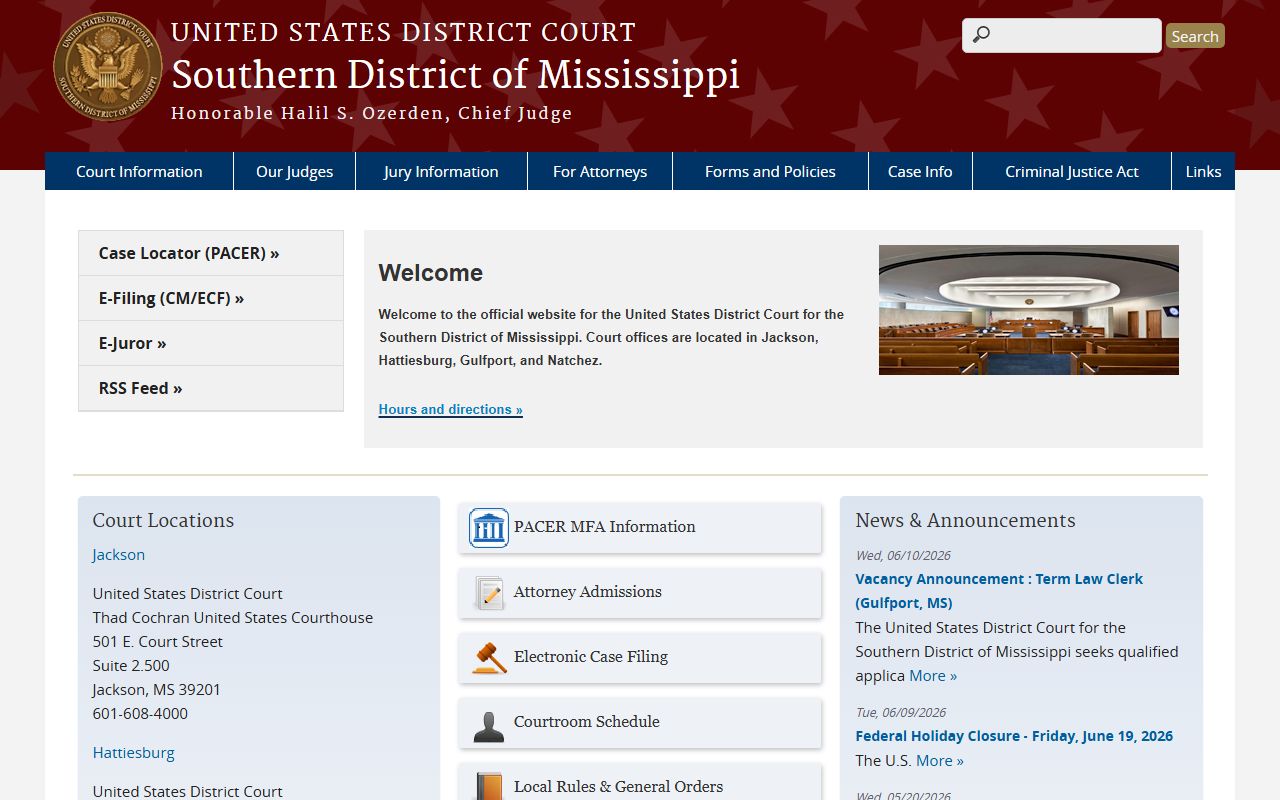
The district court is a separate system with offices in Jackson, Hattiesburg, Gulfport, and Natchez. A Smith County resident in a federal case appears there, not at the county courthouse. Smith County's place in that district is set by an official map of divisions. The divisional county listings place Smith County in the Northern Division, held at Jackson.
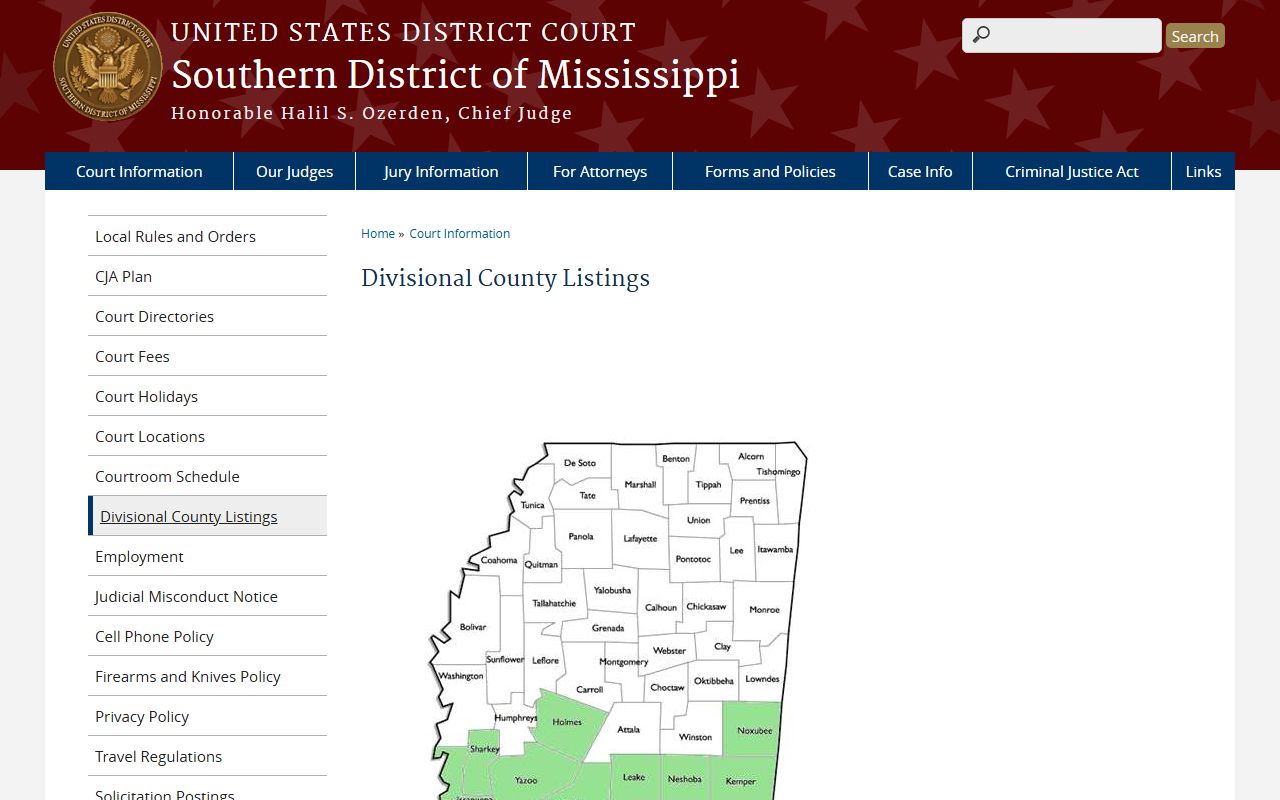
That listing matters when a person needs to know where to file or appear. Smith County federal matters route to Jackson, the Northern Division seat. There is no federal courthouse inside Smith County, so the division assignment is the key detail.
Federal Case Lookup for Smith County Cases
Federal court records are searched through PACER and the court's CM/ECF system. This is the federal counterpart to the state's electronic court access. It does not connect to Smith County Circuit Court files. The PACER court lookup for the Mississippi Southern District gives the addresses, contacts, and links a filer needs.
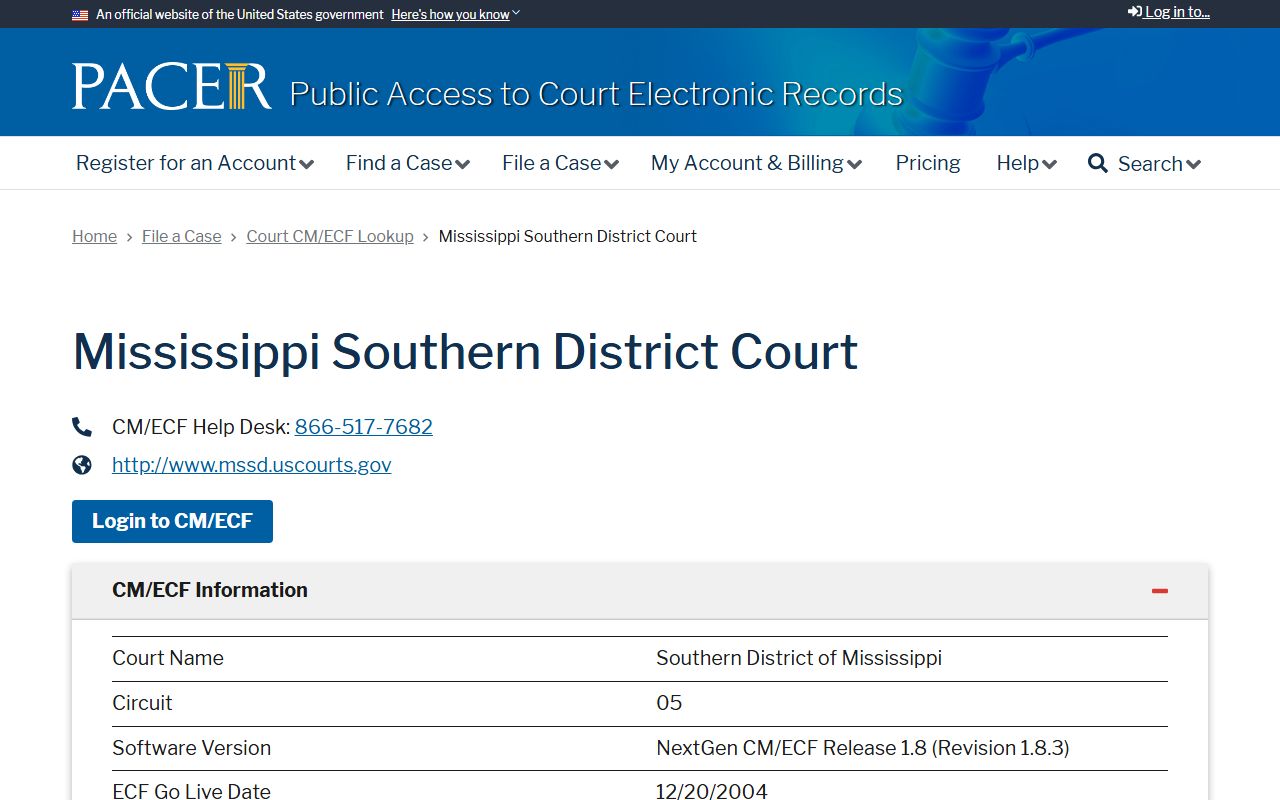
PACER is a paid federal system with a per-page charge for documents. The PACER Service Center answers questions at 800-676-6856. The legal foundation for these districts is federal statute. The text of 28 U.S.C. 104 confirms that the Southern District's Northern Division includes Smith County and that court sits at Jackson.
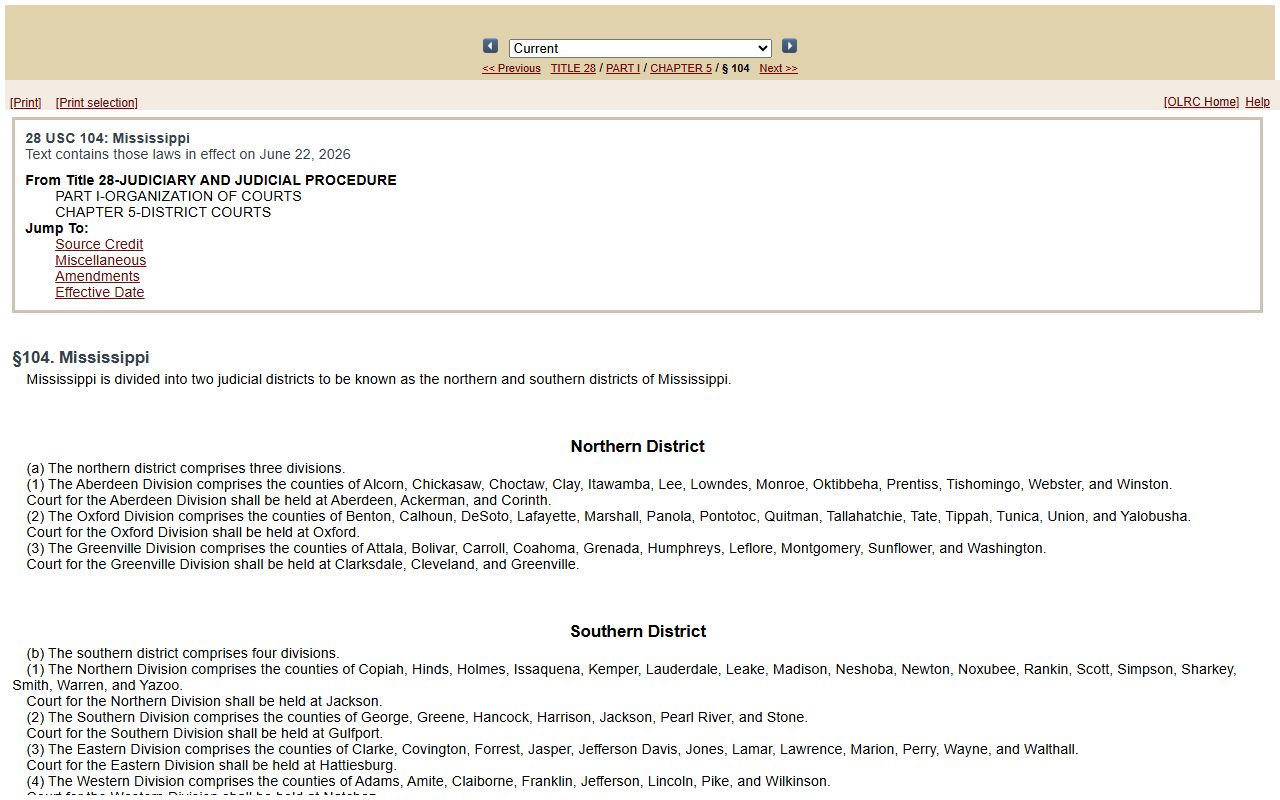
The statute is the official source for which counties sit in which division. It settles the venue question that the divisional listings summarize. For Smith County, the answer stays the same. Federal trials are held at Jackson in the Northern Division.
Bankruptcy Court for Smith County Filers
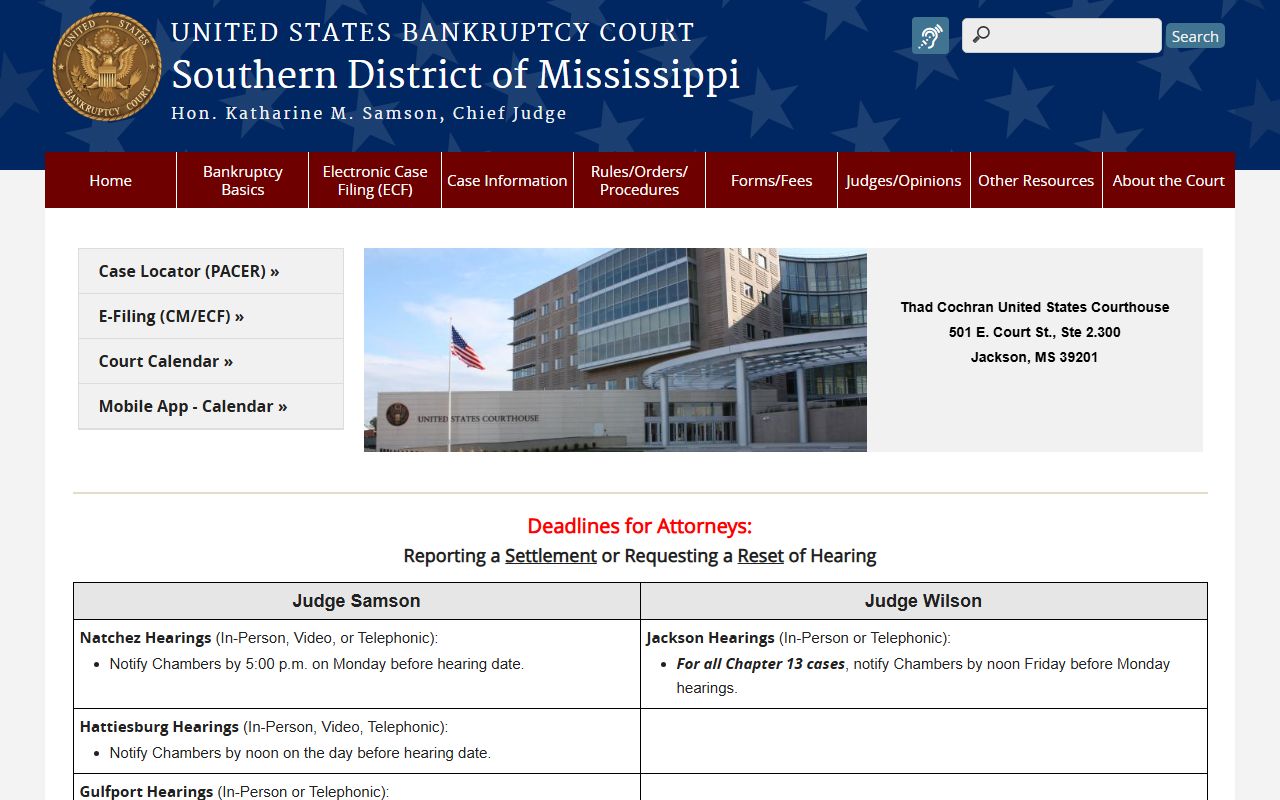
Bankruptcy is a federal matter. It is not handled by the Circuit Court and not by the Chancery Court that oversees county probate. A Smith County resident who files for bankruptcy uses the U.S. Bankruptcy Court for the Southern District of Mississippi. The court keeps offices at the Thad Cochran United States Courthouse in Jackson and at Gulfport.
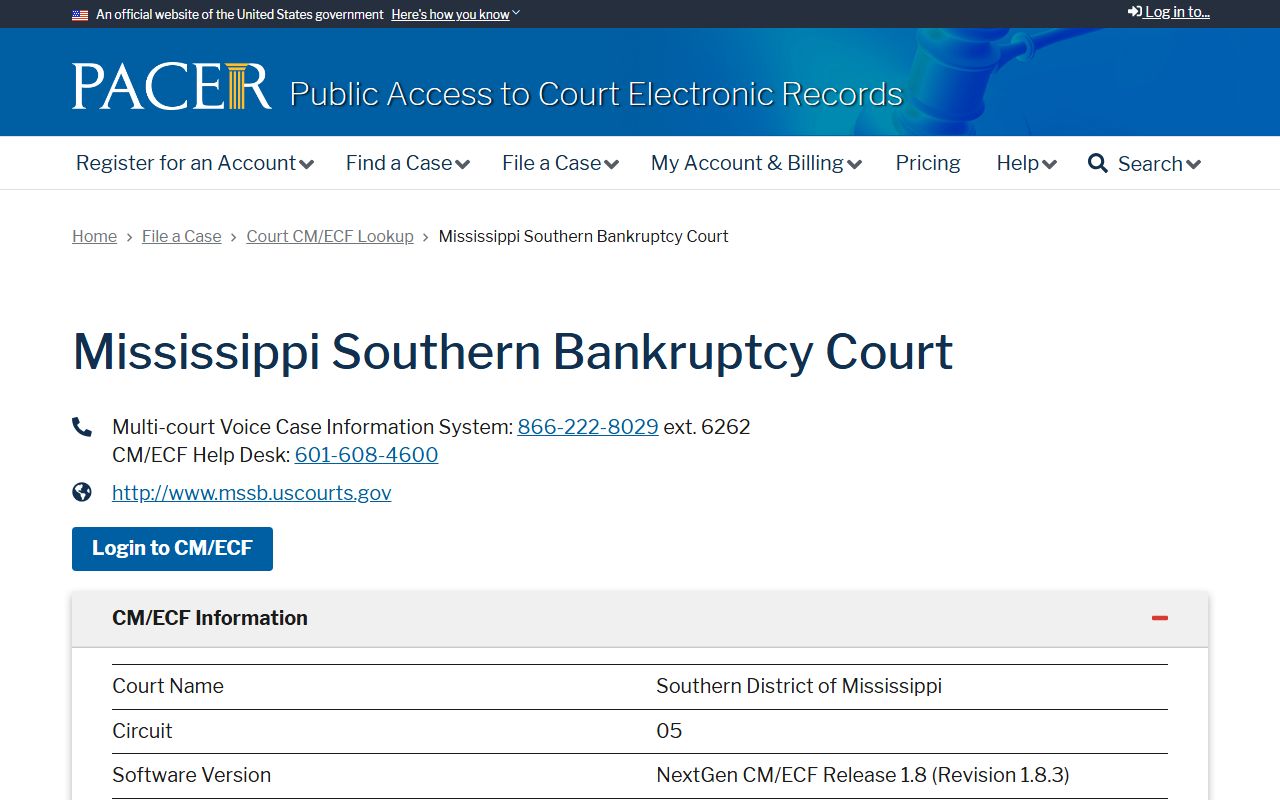
Bankruptcy records also live on PACER, apart from any Smith County court file. The PACER lookup for the Mississippi Southern bankruptcy court lists the help desk email and office hours of 8:00 a.m. to 5:00 p.m., Monday through Friday.
Keeping these systems straight saves time. State debt judgments and collections can run through the county courts, but a true bankruptcy filing is federal. The federal appellate court for Mississippi is the U.S. Court of Appeals for the Fifth Circuit.
Lower Courts and Appeals in Smith County
Below the Circuit Court sit the Justice Court and any Municipal Court. The Smith County Justice Court hears small civil claims up to $2,500, citations, and criminal violations that happen outside city limits. It also issues warrants, subpoenas, and process papers. Constables Joe Blakeney and Bobby Easterling serve that process and support the court.
Felony charges that start at the lower level move up to Circuit Court once a grand jury indicts. District Attorney Chris Hennis presents felony cases to the grand jury and prosecutes them in Circuit Court for the 13th Judicial District. County Prosecuting Attorney Wendell James handles cases in the Justice and County courts. A losing party in any of these courts may appeal upward toward the Circuit Court and then the state appellate courts.
Smith County's structure keeps the law court and the equity court apart. The Circuit Court is the place for felonies, big civil suits, and appeals. The Chancery Court is the place for divorce, estates, and land. Sorting the case into the right court is the surest way to find the record that goes with it.